
BLOG: Dr Eve Allen – Sila, Spirit, and the Healing Power of Nature: Reflections from Greenland


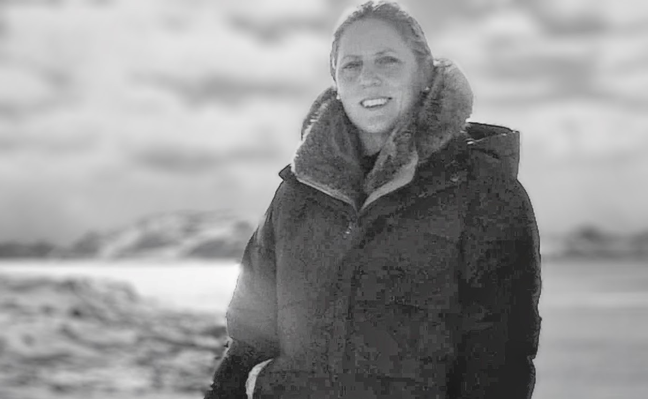
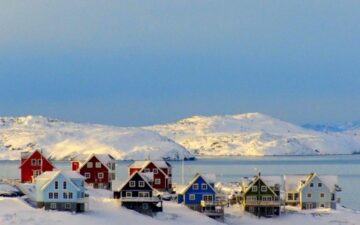
In March this year, I travelled to Greenland as part of work exploring child and youth mental health. During the visit, I met with the UNICEF team and local government colleagues who are leading programmes to support children and young people’s wellbeing. The trip offered valuable insight into how nature, culture, and community shape mental health in Greenland. What I learned went beyond formal policy and service structures — it highlighted how everyday relationships with the environment play a central role in wellbeing, and how these ideas could inform approaches in the UK.
Academic Reflections: Nature, Mental Health, and Indigenous Wisdom
In my work on child and youth mental health, I often explore how nature‑based interventions and social prescribing can reduce anxiety and depression. Greenland offered a living example of this.
The Inuit worldview, described in the museum’s Sila and the Beyond exhibit, sees the world as two interconnected realms — the visible Sila and the invisible Silap Aappaa. Sila refers to weather, consciousness, and mind; when disrupted, balance and wellbeing are affected. Healing involves restoring harmony between people, nature, and spirit.
This understanding aligns with ecological models of mental health, where wellbeing is not just an individual state but a reflection of balance within systems. The Inuit shaman’s role in restoring Sila through connection with the sea, land, and sky mirrors how we in the UK are beginning to recognise the therapeutic power of green and blue spaces. Programmes that connect children with nature — through outdoor learning, gardening, or coastal walks — echo these ancient practices of reconnection.
What We Can Learn and Apply in the UK
- Holistic balance — Wellbeing is shaped by relationships between environment, culture, and inner life.
- Everyday nature contact — Nature is part of daily life in Greenland; UK systems could normalise routine outdoor time.
- Cultural identity and place — Connection to land and heritage strengthens belonging and resilience.
- Community‑led approaches — Wellbeing is supported through community structures, not only professional services.
- Environmental stewardship — Caring for nature fosters agency, purpose, and connection.
- Embodied practices — Drum songs and movement demonstrate the value of sensory and creative approaches.
Spirit and Soul: Healing Through Rhythm and Relationship
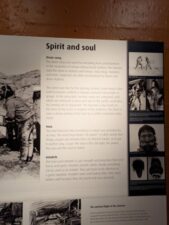
The Spirit and Soul exhibit described how drum songs were used for both celebration and conflict resolution. The rhythm of the drum, the movement of dance, and the communal act of singing were all ways to restore harmony. In modern mental health practice, this aligns with embodied therapy — healing through movement, rhythm, and shared experience.
The Inuit belief that every being has an inua, a soul or essence, reinforces the idea that wellbeing is relational — between humans, animals, and the environment. Amulets symbolised protection and strength, representing the inner resources people draw upon in times of distress. This resonates with contemporary understandings of resilience as a web of relationships, meanings, and connections.
Personal Reflections: The Untold Connection
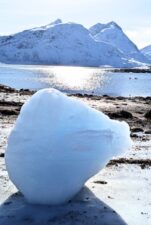
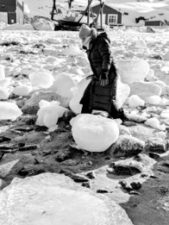
My time in Greenland provided not only professional insight but also an embodied understanding of how environment shapes psychological states. Standing on the ice, I experienced a noticeable shift in my own internal regulation. The cold air, open space, and absence of noise created conditions that environmental psychology describes as restorative environments — settings that reduce cognitive load, support emotional regulation, and promote clarity.
This experience highlighted how much I personally benefit from being outdoors — from exposure to natural stimuli, from sensory engagement, and from the psychological spaciousness that large landscapes create. In Greenland, this connection is not exceptional; it is embedded in daily life. Nature is not a passive backdrop but an active component of wellbeing.
The people I met spoke of the sea, sky, and land as relational entities — sources of identity, continuity, and meaning. This reflects Indigenous frameworks in which wellbeing is understood relationally, encompassing human–environment interactions, cultural narratives, and collective experience. Such perspectives challenge more individualised Western models of mental health and emphasise that wellbeing is shaped by dynamic interactions between person, place, and community.
Bringing the Lessons Home
The Inuit understanding of Sila — balance between mind, weather, and world — offers a powerful metaphor for mental health systems. It reframes wellbeing as something shaped not only by individual experience but by the wider relationships between people, place, and environment. For the UK, this perspective encourages a shift from viewing nature as an optional enhancement to recognising it as a core component of wellbeing strategies. This includes designing nature‑rich school environments, expanding outdoor therapeutic approaches, and valuing cultural narratives that connect children and young people to the places they live.
In Greenland, nature is woven into identity, culture, and community. The lessons it teaches — patience, resilience, humility — are lived rather than abstract. They are present in the rhythm of the drum, the stories of the moon and sun, and the quiet strength of communities shaped by ice and sea. These practices illustrate how cultural traditions can act as ecological protective factors, supporting emotional regulation, belonging, and continuity.
Translating this to UK contexts requires recognising that nature‑based approaches can complement and strengthen existing mental health interventions. Evidence from attention restoration and environmental psychology shows that natural settings reduce cognitive fatigue, support emotional regulation, and enhance wellbeing. Yet access to nature is uneven across the UK, shaped by geography, socioeconomic conditions, and urban design. Learning from Greenland means acknowledging that nature cannot be a luxury — it must be part of everyday life, particularly for children and young people.
Achieving this requires systemic change:
- integrating nature into school design and curriculum
- expanding community‑led outdoor programmes
- recognising cultural relationships with land as part of wellbeing
- ensuring equitable access to green and blue spaces
- embedding environmental stewardship into youth mental health strategies
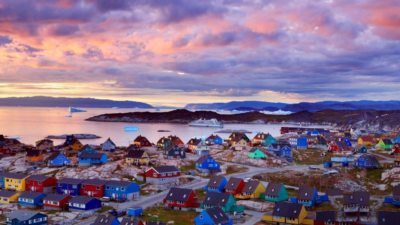
Greenland also highlights the importance of cultural narratives in shaping wellbeing. Stories of land, sky, and seasons provide meaning and continuity. In the UK, supporting children to connect with local heritage, community identity, and place‑based narratives may strengthen resilience, particularly for those who feel disconnected from their surroundings.
As mental health challenges continue to rise in the UK, Greenland’s example suggests that one of the most profound interventions may be the simplest: stepping outside. Listening. Breathing. Re‑establishing a relationship with the environments, we inhabit. This is not just about reducing distress; it is about cultivating connections. It is about recognising that wellbeing is strengthened when we understand ourselves as part of something larger — a landscape, a community, a shared story — and that this connection can be a source of stability, identity, and healing.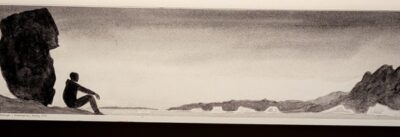
Related News Stories
In March this year, I travelled to Greenland as part…

On Wednesday October 7, 2026, Health Equity North supported two…
Minority ethnic women in the North of England face a…



