
Children’s mental health crisis risks fuelling ‘lost generation’


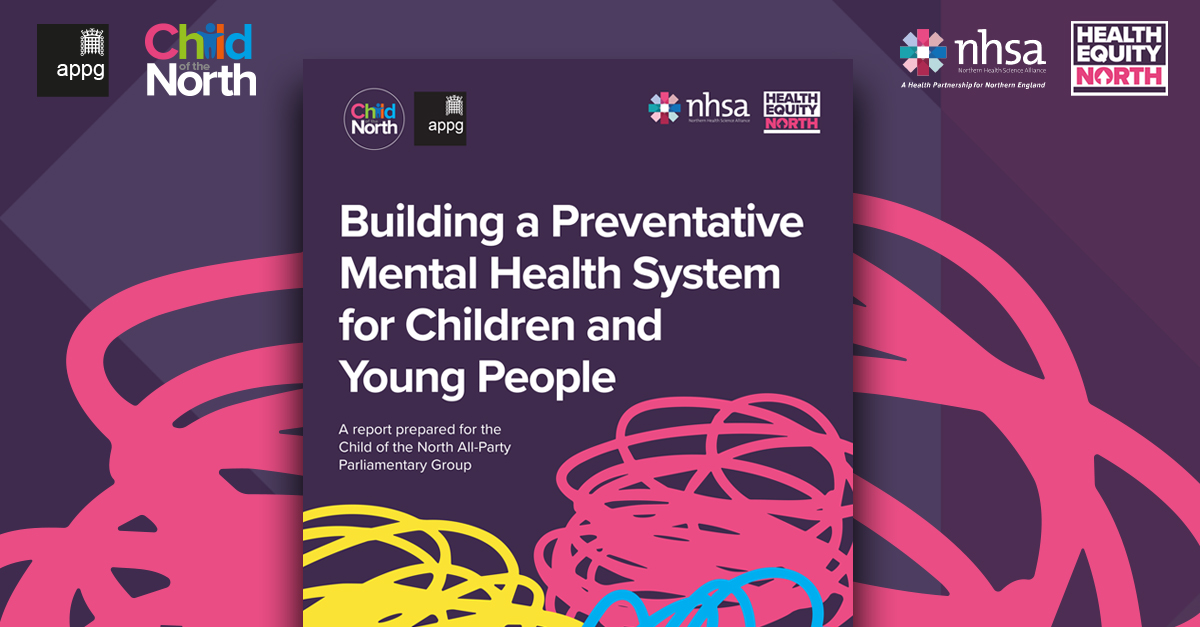
Read the report here
Health experts warn that children’s mental health in England has reached crisis levels, as a new report reveals children in the North are more likely to experience mental health difficulties than those in the South.
Nearly one in five primary school children are now experiencing a probable mental health disorder – more than double the rate in 2011 – according to analysis published today by Health Equity North on behalf of the Child of the North All-Party Parliamentary Group (APPG).
Children and young people growing up in disadvantaged communities, particularly across parts of the North of England, are more likely to experience cumulative adversity, poorer wellbeing, and reduced access to support.
The report, ‘Building a Preventative Mental Health System for Children and Young People’, shows that demand for support is rapidly outpacing capacity, leaving hundreds of thousands of children without help.
Researchers are calling for coordinated action across multiple sectors to improve child and adolescent mental health, rather than relying on healthcare services alone. They say that health policy must place greater emphasis on prevention relationships, belonging, and the social conditions shaping wellbeing.
The findings revealed stark regional inequalities, including:
- Mental health difficulties are consistently higher in the North and Midlands.
- The North East has the highest levels of school-based mental health referrals.
- The North East experienced some of the largest reductions in mental health funding and was also the region that experienced the greatest decline in children’s mental health.
The report also showed:
- Teenage mental health problems have more than doubled over in the last 15 years.
- Around one-third of adolescent mental health problems could potentially be prevented through action on child poverty.
- A record 850,000 children accessed NHS mental health support in 2025
- Around 385,000 children are still waiting for mental health support.
- Children with mental health difficulties are three times more likely to miss significant amounts of school, highlighting the impact on educational outcomes and long-term life chances.
- One in four children referred for specialist mental health support are turned away.
- Around 40% of behavioural difficulties in children are linked to poverty and poor parental mental health.
The report makes clear that the rise cannot be explained by increased awareness or the COVID-19 pandemic alone, but reflects a sustained deterioration in children’s wellbeing over time. It warns that long waits, rejected referrals and high thresholds mean many children only receive help once they reach crisis point.
The report authors, led by academics from The University of Manchester, stress that these patterns reflect wider inequalities in poverty, housing, and access to community support and that the NHS “cannot treat its way out” of the crisis. Report recommendations call for a shift towards prevention, tackling the root causes of poor mental health.
The research also highlights how the consequences of adverse childhood mental health can lead to poor health and opportunities as an adult.
Without early and holistic intervention, it warns that rising mental health problems among children will continue to translate into higher levels of youth disengagement and long-term economic inactivity.
Communities across the North are already tackling these complex challenges, with positive results. The report highlights a range of innovative examples that demonstrate what effective prevention looks like in practice. These include:
- Community-based parenting programmes in Merseyside that strengthen family relationships and parental confidence
- Nature-based wellbeing support for parents and young children in Hull
- Integrated youth hubs in South Yorkshire offering wraparound support for mental health, education and employment.
Other examples include community gyms and social prescribing models that provide young people with safe spaces, trusted relationships and opportunities for connection while waiting for specialist support. Together, these case studies show that community-led, relational and place-based approaches can play a critical role in improving wellbeing, reducing loneliness, and supporting children and young people before difficulties escalate.
Authors are urging the government to tackle the root causes of poor mental health by addressing child poverty, housing insecurity and educational exclusion as core public health challenges, while recognising youth services, community provision and safe public spaces as essential parts of the mental health system. The report emphasises the importance of strengthening trusted relationships and a sense of belonging across childhood, alongside more place-based approaches that respond to local need, particularly in disadvantaged communities across the North of England.
Emma Lewell MP, Co-Chair of the Child of the North APPG, said: “Today’s mental health crisis among children and young people cannot be seen in isolation. It is closely linked to wider social and economic challenges, including rising school absence, exclusion, and increasing numbers of young people disengaging from education and employment.
“The impact of children missing school is particularly concerning as school disengagement is a key pathway into becoming NEET (not in education, employment or training). There is also a pressing need to ensure that NEETs have access to sustainable employment opportunities, alongside sufficient placement opportunities to support participation in education, skills development and vocational training. Poor mental health, absence and exclusion reinforce each other over time – leading to higher risks of unemployment, poorer health outcomes and reduced life chances in early adulthood.
“If we are serious about tackling youth unemployment and reducing the number of young people who are NEET, we must start by addressing children’s mental health and the inequalities that drive it.
“Improvement is not a pipe dream – there are already many examples of positive action across the North, with charities, community groups and education services providing support for young people. These models can be replicated across the country to support health and school services in tackling these urgent issues.
“With targeted investment to support interventions to help those in need now, and a more prevention focused mindset for future generations, there is a chance to turn the tide. We are calling for stronger coordination across healthcare, education, local government and the voluntary sector to deliver a more joined-up, preventative system that supports children earlier and reduces long-term inequalities.”
Hannah Davies, Executive Director of Health Equity North, said: “Children’s mental health is not just a health issue – it is a social and economic issue that requires coordinated action across society.
“Improving outcomes will require sustained investment in tackling child poverty, strengthening family support, improving inclusion and belonging in schools, and rebuilding youth and community services. These are not ‘nice to have’ interventions – they are critical to preventing problems before they escalate.
“This report makes clear that without early, coordinated action, we risk experiencing a lost generation, with a cycle of disadvantage that will affect not just individuals, but our economy, education system and communities for years to come. The evidence is also clear that with the right investment in prevention, we can change the trajectory and give more children the chance to thrive.”
Professor Pamela Qualter, Director of Research (SEED) at the University of Manchester, and lead report author, said: “Research shows that mental health inequalities begin very early in life, often before a child is even born. We see higher rates of perinatal mental health difficulties among parents in parts of the North, and these challenges can have lasting impacts on children’s emotional development and wellbeing.
“Children’s mental health is shaped by the environments and services that support them – including family circumstances, poverty, housing, and access to support. These factors accumulate over time, increasing the likelihood that some children face multiple and reinforcing disadvantages.
“If we want to reduce mental health inequalities, we need to think much earlier and much more holistically. Supporting parents, families and communities is one of the most powerful ways we can improve outcomes for children and prevent problems from escalating later in life.”
The report ‘Building a Preventative Mental Health System for Children and Young People’ is available to view at https://www.healthequitynorth.co.uk/app/uploads/Building-a-Preventative-Mental-Health-System-for-Children-and-Young-People-Report-June-2026.pdf
Related News Stories
Death rates among adults aged 25–49 were 42% higher in…

In March this year, I travelled to Greenland as part…
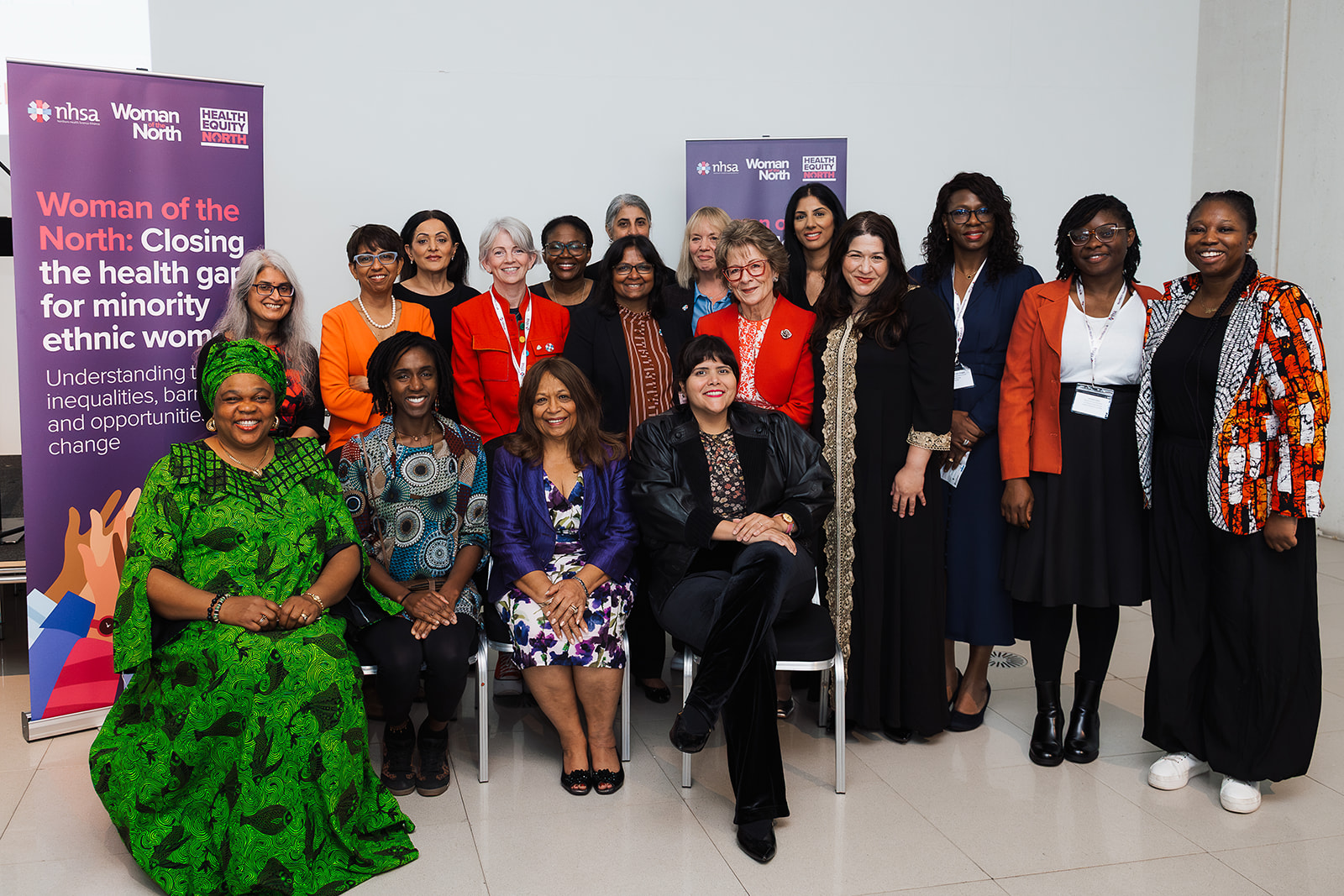
On Wednesday October 7, 2026, Health Equity North supported two…



